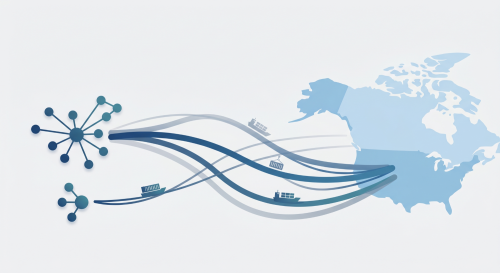
The landscape for Amazon sellers has recently transformed with the introduction of the new FBA Inventory Placement Service fee. This 2024 change has significantly altered the cost and strategy for FBA inbound logistics, leaving many sellers scrambling to understand its implications and adapt.
What is the New Inventory Placement Service?
The Inventory Placement Service refers to the new fee structure Amazon applies to FBA sellers when they create a shipping plan. Previously, Amazon's system would typically split a seller's shipment into multiple boxes destined for different fulfillment centers across the country, generally at no extra cost.
Under the new policy, Amazon now provides sellers with options for their inbound shipments, each with a different fee structure. Sellers can now choose to pay a premium for fewer shipment splits or avoid the fee by agreeing to more complex splitting.
Amazon's stated goal is to give sellers choice and to better distribute inventory across its network, but the practical effect is a significant new cost for those who prefer simpler logistics.
A Seller's New Options & Their Costs
When creating a shipping plan, sellers are now presented with several "placement" options, which effectively replace the old system.
- Standard Placement (1-3 Warehouses): This is the premium, high-cost option. Sellers pay a per-item fee to send their inventory to a single receive center (or, in some cases, 2-3 centers). Amazon then handles the "downstream" distribution. This is the simplest option for the seller but carries the highest fee. As the article notes, this fee can be substantial, even for a single box.
- Dispersed Placement (4+ Warehouses): This is the "fee-free" option. To avoid paying the new placement fee, sellers must agree to Amazon's "optimized" shipment split. This typically means dividing the inventory across four or more different fulfillment centers. This option is free of placement fees, but it significantly increases the seller's own logistics complexity and "first-mile" freight costs.
Key Challenges and Market Observations
The introduction of these options has created several new challenges for sellers and their logistics partners:
- Unfavorable Warehouse Assignments: Sellers who choose the "Dispersed Placement" (fee-free) option have no control over where Amazon tells them to ship. The algorithm frequently assigns warehouses in the Eastern and Central US, with a very low probability of assigning a convenient Western US warehouse. These locations can be difficult and expensive to reach, especially for sellers shipping from Asia.
- The "Amazon Managed Delivery (AMP)" Factor: Amazon has introduced its own new product, Amazon Managed Delivery (AMP), through Amazon Global Logistics (AGL). While this service may offer a way to avoid the placement fee, its own base cost is reportedly significantly higher than standard AGL, trading one high cost for another.
- The Cost of "Simplicity": The "Standard Placement" (single warehouse) option is by far the most expensive. Reports of fees like $102 for a single shipment to a Western US warehouse (SCK4) illustrate that Amazon is heavily penalizing sellers who do not use the dispersed, multi-warehouse option.
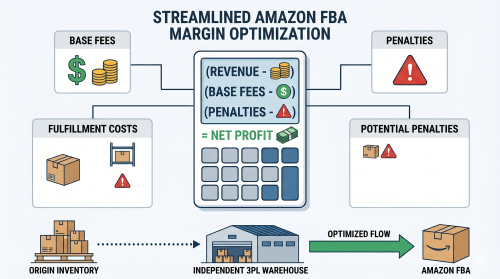
The new policy has undoubtedly increased costs for all sellers. They now face a difficult choice: pay Amazon's high placement fees for convenience or absorb the increased operational complexity and freight costs of splitting shipments themselves.
With the current economic challenges of inflation and increased competition, it is crucial for Amazon sellers and third-party logistics (3PL) providers to develop new strategies. This change forces 3PLs to become more flexible, offering services like multi-warehouse de-consolidation to help sellers adapt to this new and more complex logistics landscape.
14 Jun, 2024