Launching an e-commerce brand on Amazon offers unparalleled access to millions of active buyers, but understanding the platform's increasingly complex fee structure is critical to survival. In 2026, Amazon introduced a series of new operational surcharges and fee adjustments that are aggressively squeezing seller margins.
If you are evaluating your unit economics, a surface-level calculation is no longer enough. This comprehensive guide breaks down the true cost of selling on Amazon in 2026, covering baseline fees, fulfillment costs, and the newly expanded logistical penalties you must avoid.
1. Amazon Selling Plans (Account Fees)
Before listing your first product, you must choose a foundational selling plan. Amazon offers two tiers:
- Individual Plan ($0.99 per item sold): Best for absolute beginners. There is no monthly subscription fee, but you are limited to selling fewer than 40 units per month and cannot access advanced advertising tools.
- Professional Plan ($39.99 per month): Mandatory for established brands. This unlocks unlimited monthly sales, API integration capabilities, access to the Buy Box, and the ability to run Amazon PPC (Pay-Per-Click) campaigns.
2. Referral Fees: The "Amazon Commission"
Every time you sell an item, Amazon takes a cut of the total sales price (which includes shipping charges but excludes tax).
- Standard Rates: For most categories, the referral fee ranges strictly between 8% and 15%.
- Category Variations: High-margin categories like jewelry and watches carry fees up to 16% to 20%, while certain consumer electronics might sit as low as 8%.
- Minimum Fees: Many categories enforce a minimum referral fee (usually around $0.30) to ensure Amazon profits even on extremely cheap, high-velocity items.
3. Fulfillment Costs: The FBA Baseline Updates
How you deliver the product to the customer represents your largest variable expense. If you opt for Fulfillment by Amazon (FBA), you must factor in the latest 2026 rate updates.
While Amazon stated the base FBA fees would only increase by an average of $0.08 per unit sold in 2026,, the reality of the total fulfillment cost is much heavier:
- Fulfillment Fees: Calculated by the item’s dimensions and outbound shipping weight. In 2026, standard-size items priced between $10 and $50 saw an average increase of $0.08 per unit, with steeper increases for products priced over $50.
- The SIPP Packaging Penalty: If you sell bulky items and do not enroll in the "Ships in Product Packaging" (SIPP) program, Amazon now hits you with a packaging fee averaging $2.07 per unit.
- Logistics Surcharge: Starting April 17, 2026, Amazon applied a new 3.5% fuel and logistics-related surcharge across all FBA fulfillment fees in the US.
4. The 2026 "Hidden" Amazon Penalty Fees
The true danger to your 2026 profit margins lies in Amazon's operational penalty fees. These are charges levied against sellers who do not perfectly optimize their inventory flow.
A. Low-Inventory-Level Fees
Amazon now actively penalizes sellers who fail to keep enough stock on hand. If your inventory levels fall below a 28-day supply relative to customer demand, Amazon charges a "Low-inventory-level fee" on shipped units.. This effectively taxes you for selling out too quickly, making agile stock replenishment mandatory.
B. Inbound Placement Service Fees
Introduced recently and updated for 2026, Amazon charges you based on how you ship products into their network. If you choose the "Minimal shipment splits" option (sending your cargo to a single location), Amazon will charge you a premium to distribute the goods themselves. In 2026, this fee increased by an average of $0.05 per unit for standard-size products.
C. Category-Specific Returns Processing Fees
For categories with high return rates, Amazon charges a returns processing fee. In 2026, these rates vary drastically depending on what you sell:
- Grocery: 2.9%
- Toys and Games: 4.7%
- Consumer Electronics: 11.2%
- Backpacks and Luggage: 12.8%
D. Aged Inventory Surcharges
Using Amazon as a long-term storage facility is financial suicide. In 2026, minimum aged inventory fees for items sitting for 12 to 15 months increased to $0.30 per unit per month.. If your items sit for over 15 months, the penalty leaps to $0.35 per unit or $7.90 per cubic foot (whichever is greater).
5. Defending Your Profitability: The 3PL Imperative
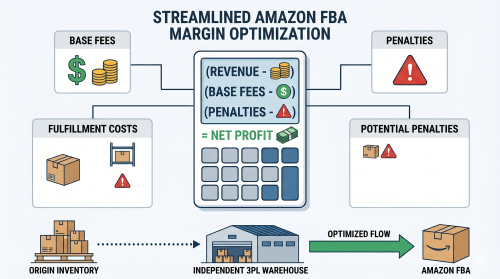
When you add the 15% referral fee, the FBA fulfillment costs, the 3.5% logistics surcharge,, and potential inbound/low-inventory penalties, Amazon can easily consume 35% to 45% of your product revenue.
The ultimate strategy for high-volume sellers in 2026 is avoiding Amazon's storage network as much as possible.
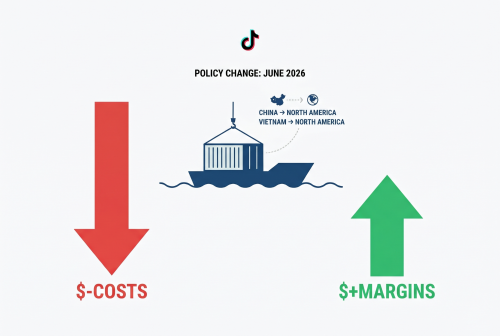
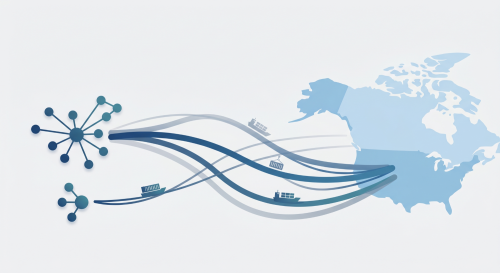
By staging your primary inventory in an extensive independent network—utilizing up to 1,109,000 square feet of dedicated US-based warehousing space—brands can execute cost-effective, bulk freight routing directly from manufacturing hubs in China and Vietnam.
Instead of dumping massive shipments into Amazon FBA (and risking extreme storage and placement penalties), an agile 3PL infrastructure allows you to precisely drip-feed inventory into Amazon just in time to maintain the 28-day supply threshold. This hybrid approach slashes your inbound fees, eliminates aged inventory surcharges, and firmly protects your bottom line.
30 May, 2026